
Our story
Who we are
ASTIFERME is a legally registered Congolese company based in Bukavu, in South Kivu province, in the Democratic Republic of the Congo. Since 2023, we have been developing an activity specialized in black soldier fly (Hermetia illucens) farming and in recovering biodegradable organic matter with this technology.
Our approach rests on a simple principle: turning organic matter that is often seen as waste into useful resources for agriculture, animal feed and the protection of the environment.
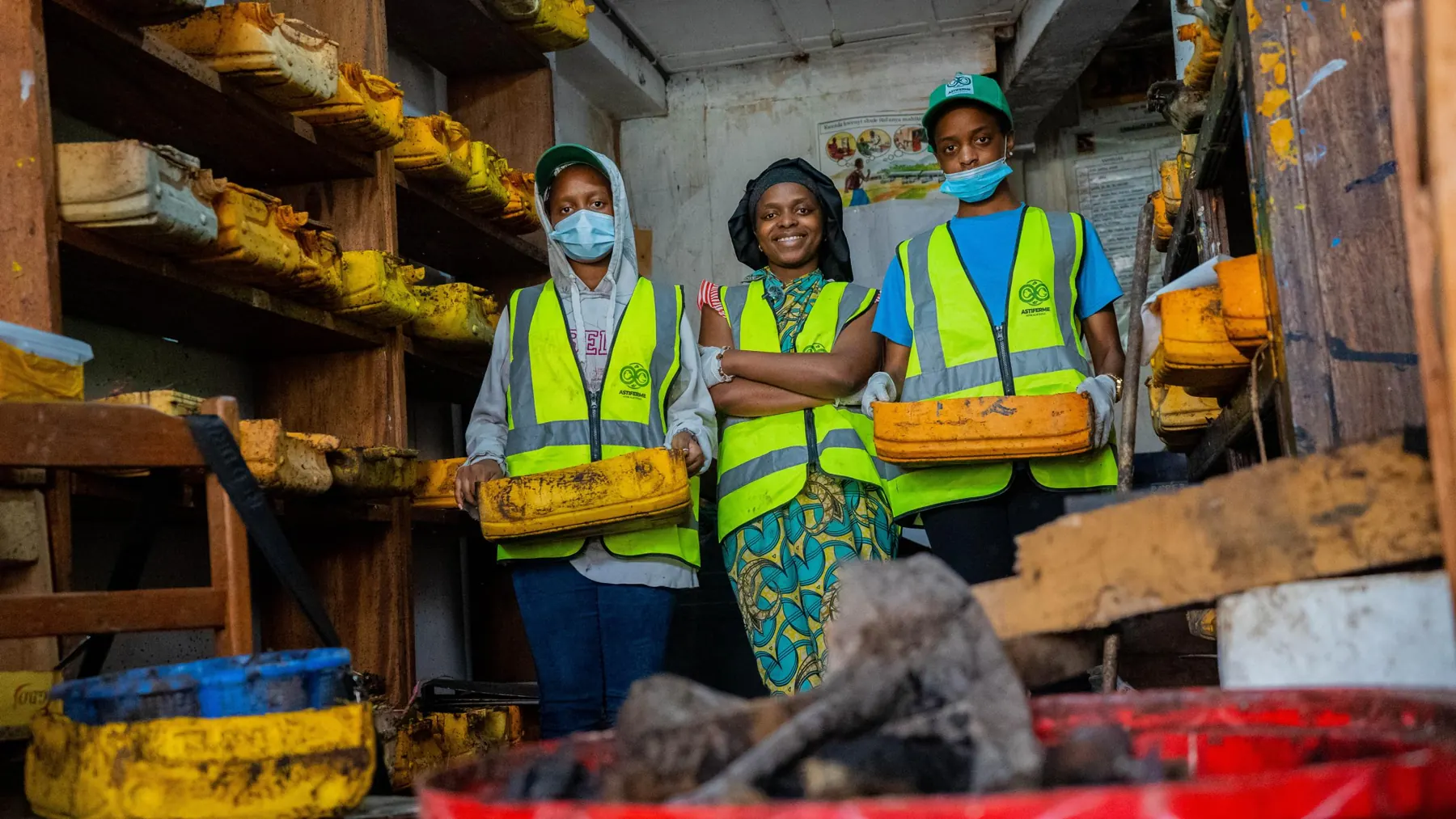
Nothing is lost, everything is transformed.
This is the principle that guides our approach and our commitment to a more circular economy.
Why does ASTIFERME exist?
Our approach responds to several environmental, agricultural, economic and health challenges that are closely linked.
- 01
Piling organic waste and pollution
In our cities, a large amount of organic waste is abandoned or poorly managed. Its accumulation and decomposition contribute to environmental pollution, bad smells and the degradation of water. When it blocks gutters and drainage systems, it can also make flooding worse.
- 02
The spread of houseflies and health risks
Exposed organic waste attracts houseflies and encourages them to multiply. By landing in turn on waste, contaminated matter and food, these flies can carry pathogens and contribute to the contamination of food and water. They therefore pose a risk to human health, especially where sanitation is inadequate.
- 03
Competition over sources of protein
Human food and animal feed partly rely on the same protein resources, notably fish and soy. Growing demand for ingredients such as fishmeal and soybean meal puts pressure on these resources. Fishmeal production in particular can contribute to the overexploitation of aquatic ecosystems when catches exceed the capacity of fish stocks to renew themselves.
It is therefore necessary to develop alternative sources of protein, able to meet the needs of livestock farming while reducing dependence on certain conventional resources.
- 04
Soil degradation and falling fertility
The loss of organic matter, erosion and some unsustainable farming practices contribute to soil degradation. Excessive dependence on chemical fertilizers, or their misuse, can also weaken the soil's biological balance. Restoring soil fertility is therefore a major challenge for sustainable agriculture and for protecting the capacity to produce food.
- 05
The cost and availability of animal feed
Farmers face the high cost of some feed ingredients, their sometimes irregular availability, and difficulties in balancing the nutrition of rations. This situation can affect the profitability of farms and limit their growth.
Our answer: the black soldier fly
Faced with these challenges, ASTIFERME is betting on the potential of the black soldier fly, an insect whose larvae have a remarkable ability to eat and break down biodegradable organic matter.
Our technology consists of raising these larvae under controlled conditions and feeding them organic matter that has been carefully selected and prepared. As they grow, they consume this matter and can reduce the mass of some organic substrates by up to 70%, depending on their nature and the rearing conditions.
This process makes it possible to recover value from part of the organic matter that would otherwise have been abandoned or disposed of without recovering its value.
This solution brings several complementary answers
Recovering value from organic waste
The larvae help reduce the amount of organic matter to be treated and limit its build-up when it is handled in a controlled system.
A new source of protein for animal feed
The larvae are a biomass that is naturally rich in protein and fat. They can be used as an ingredient in feed formulations for animals, helping to diversify the sources of protein available.
Turning residues into organic fertilizer
The process also produces a residue called FRASS, made up of larval droppings, leftover substrate and shed skins. After suitable preparation, this residue can be used as an organic fertilizer, returning organic matter and nutrients to the soil.
Reducing pressure on certain natural resources
By developing an alternative source of protein for farm animals, we help diversify feed ingredients and reduce dependence on conventional sources, notably fishmeal.
The black soldier fly is different from the housefly. Its controlled rearing makes it possible to recover value from organic matter without encouraging houseflies to multiply. This technology complements sanitation and waste management measures; it does not replace them.
Our commitment
At ASTIFERME, we see organic waste not as a mere environmental burden but as a resource that can be transformed and brought back into economic circuits.
We are committed to promoting responsible recovery practices, encouraging the use of local resources and contributing to more sustainable farming systems. Our approach combines innovation, entrepreneurship and protection of the environment, with particular attention to the realities and needs of our communities.
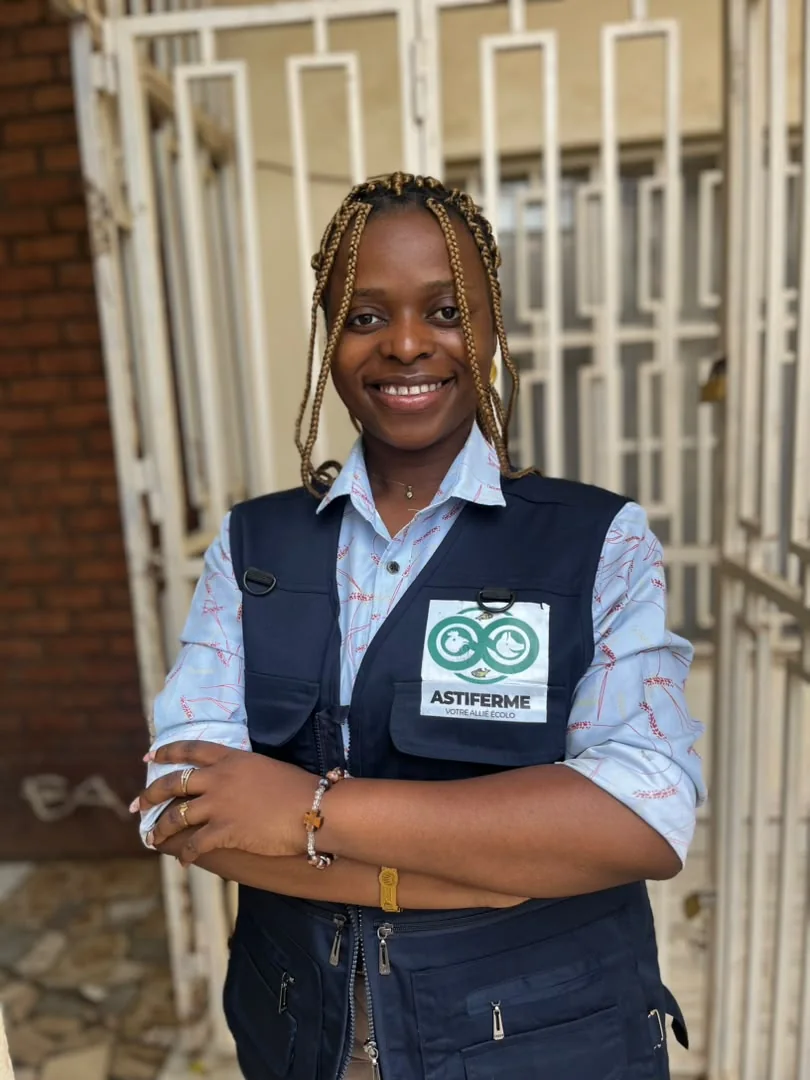
The founder
Joëlla Buhendwa
CEO of ASTIFERME
Agricultural engineer with a Master's degree in plant production, entrepreneur and leader committed to sustainable development and the promotion of women's rights.
- Women in Agriculture Award 2025: 1st place, Farming category
- Chair of the Bukavu Waste Management Consultation Framework
- Web Watcher with UNICEF
- Vice-Chair of the U-Report Girls Club
Joëlla Buhendwa is a Congolese entrepreneur whose career combines agronomic expertise, entrepreneurial leadership and community commitment. Heading ASTIFERME as Chief Executive Officer (CEO), she drives an entrepreneurial vision focused on innovation and on developing sustainable solutions suited to local realities.
She is also Chair of the Consultation Framework on waste management in the city of Bukavu, elected to this role by the Red Cross. In this capacity, she coordinates the companies, initiatives and various actors involved in waste management and recovery. She works to strengthen collaboration, to create synergies among those involved and to promote concerted action to improve waste management in the city.
In the humanitarian and community field, she is a Web Watcher with UNICEF, a trainer of trainers, a peace ambassador and Vice-Chair of the U-Report Girls Club. A defender of women's rights, she is also committed to promoting women's leadership, women's empowerment and the active participation of girls in development initiatives.
Her entrepreneurial journey has been recognized internationally. She is an international winner of the Women in Agriculture Award 2025, taking first place in the Farming category.
Through her various responsibilities and commitments, Joëlla Buhendwa helps promote agricultural innovation, entrepreneurship, environmental protection, women's rights and community participation.