
The cycle
From waste to gold, step by step.
Keep scrolling: each stage of production appears in turn.
 01Step / 10Day 0
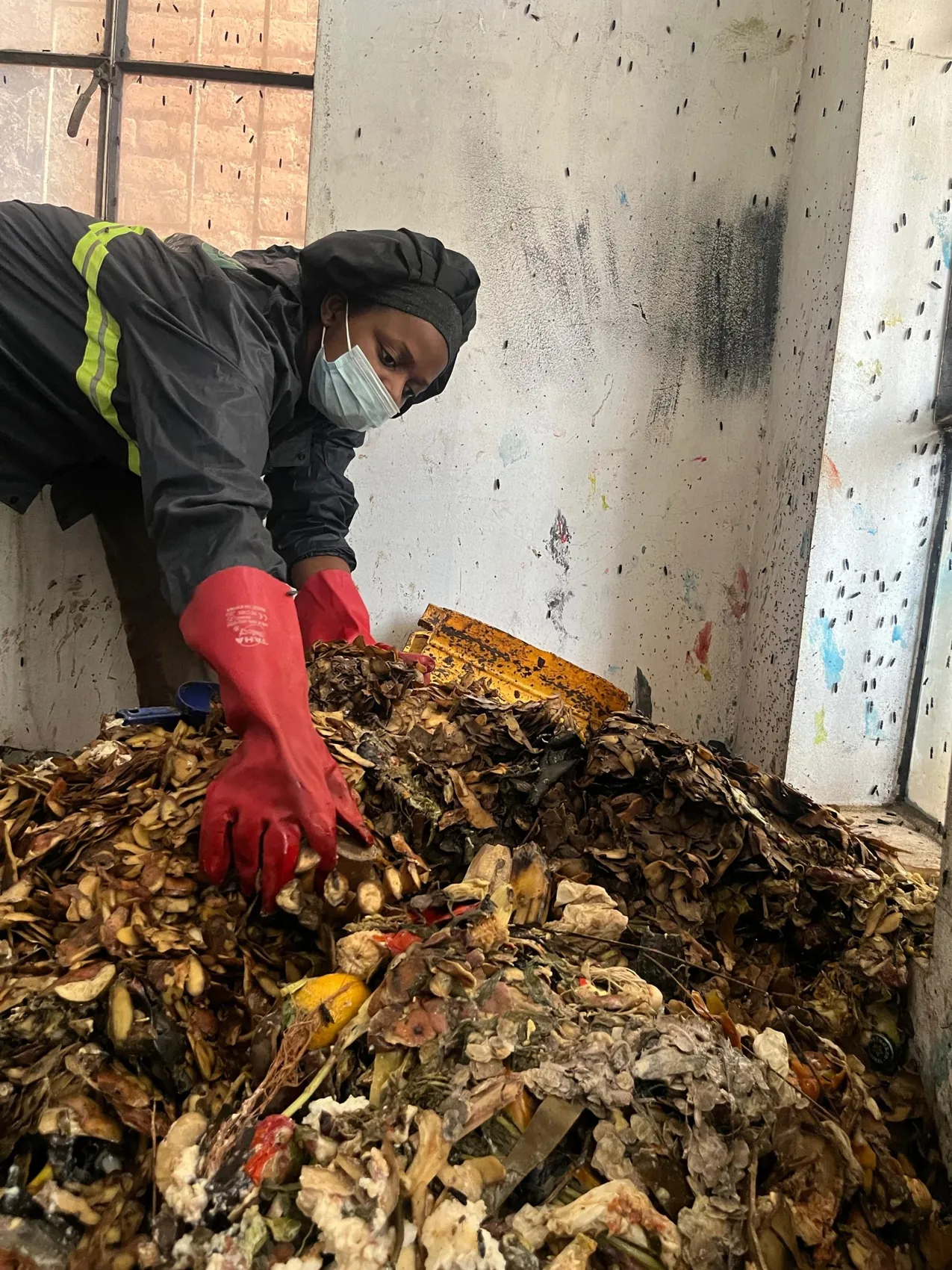
The waste arrives
Market leftovers, peelings, kitchen scraps: organic waste is collected instead of being dumped in the street.
 02Step / 10Preparation
Sorting and preparing
Plastic and glass are removed, then the organic matter is prepared to become the larvae's meal.
 03Step / 10Breeding
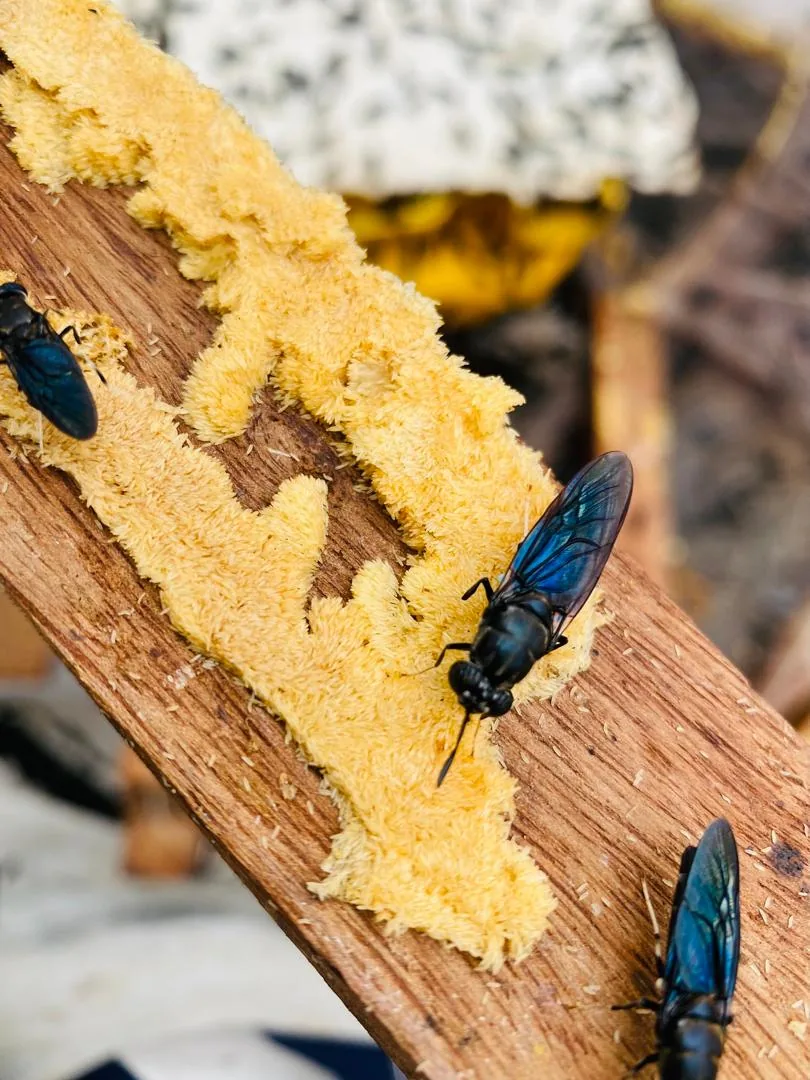
Egg laying and collection
In the breeding cage, black soldier flies mate and lay eggs on wooden supports, then the eggs are collected. The flies don't bite and don't carry disease.
 04Step / 10Rearing
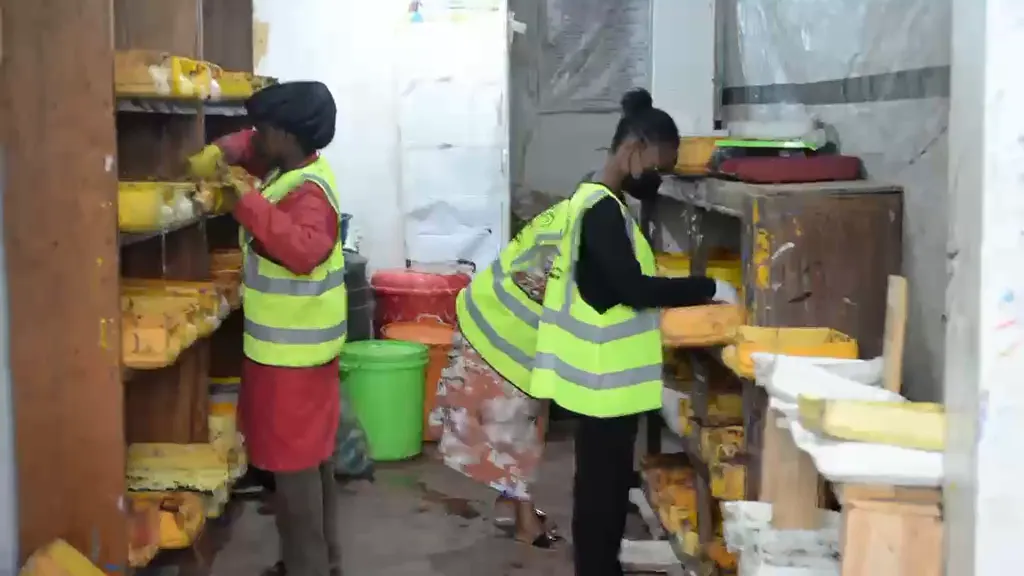
Hatching and growth
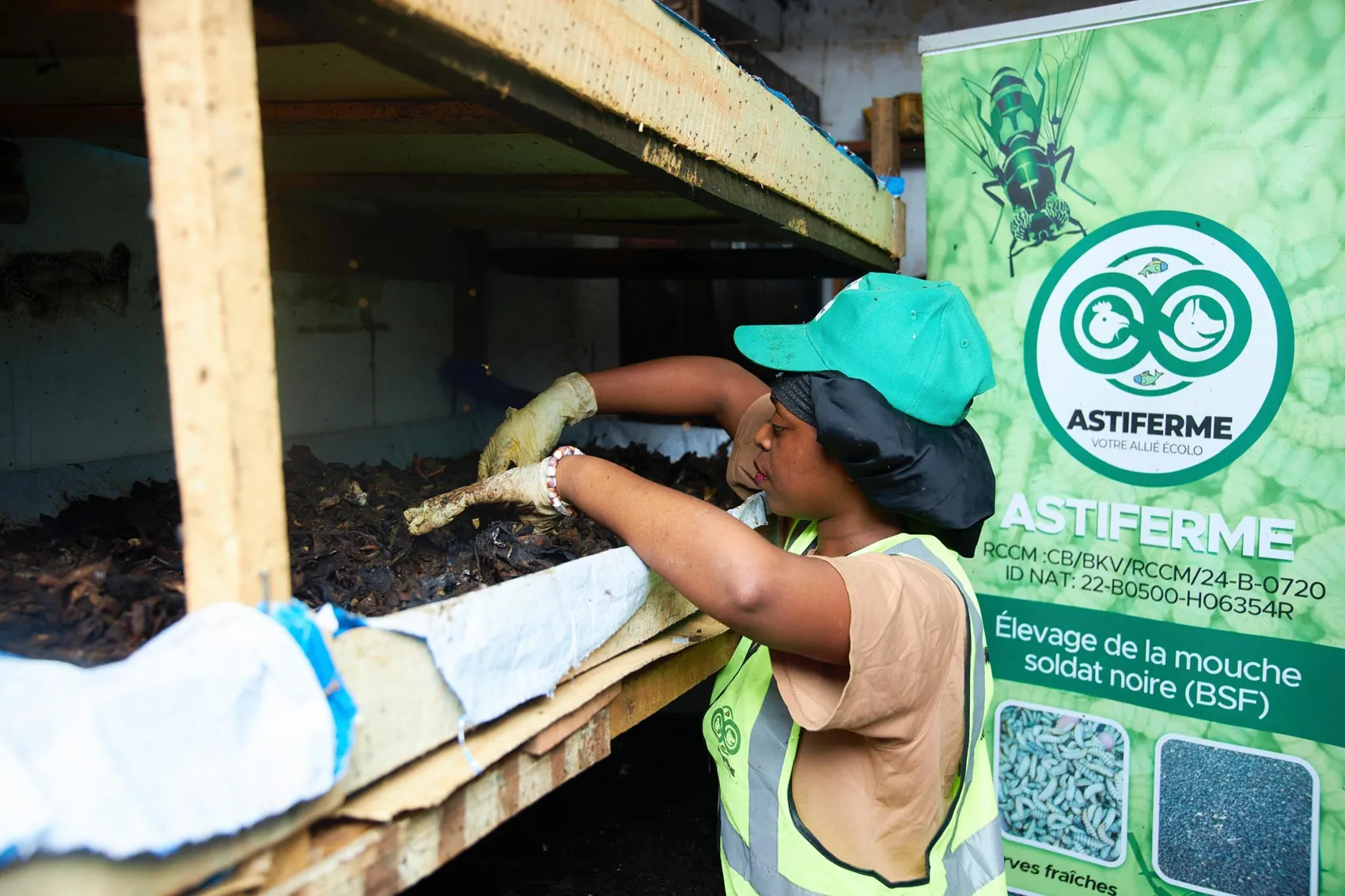
The eggs hatch and the young larvae grow in trays on the shelves of the rearing unit.
 05Step / 10Feeding
The larvae's meal
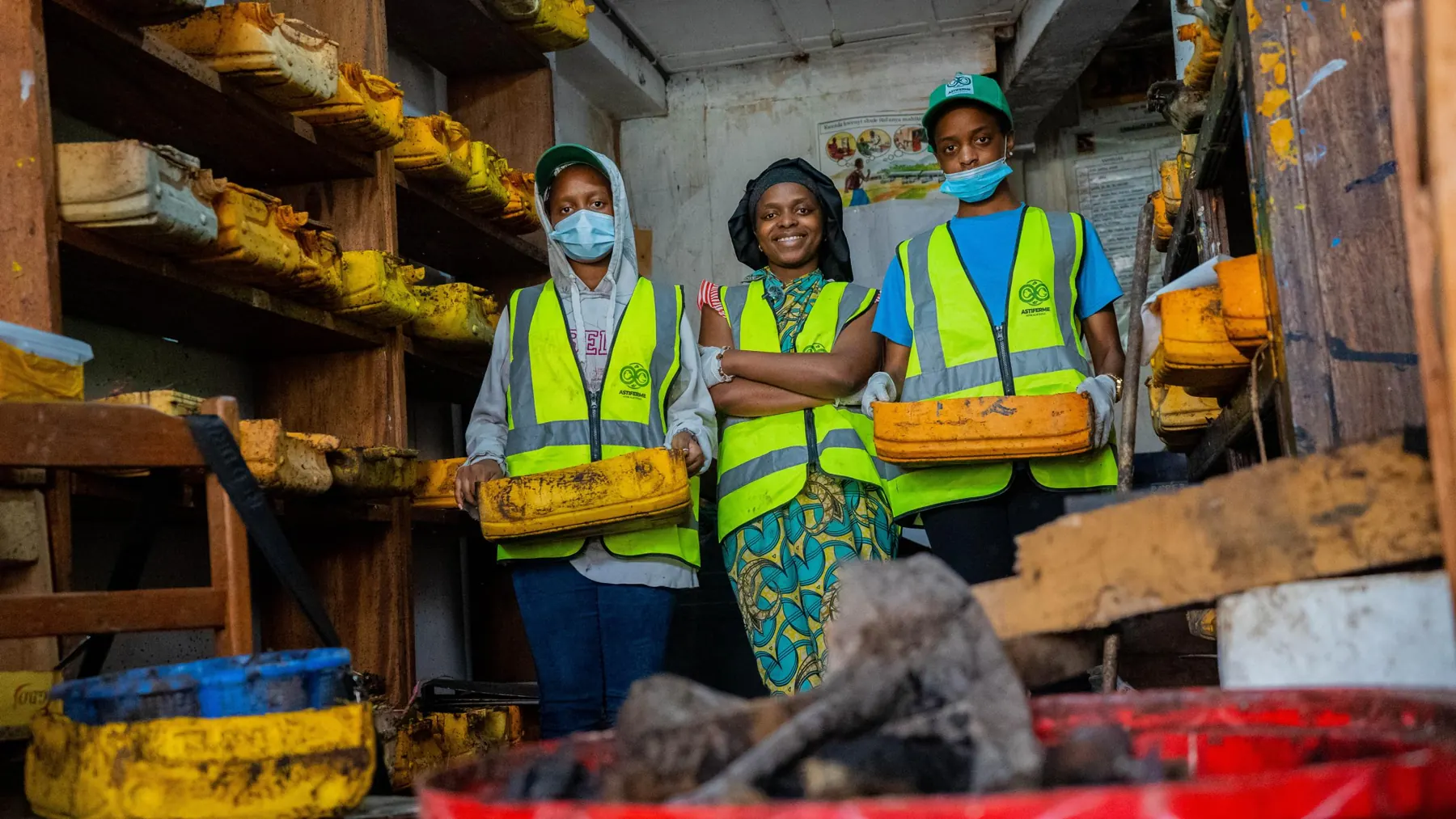
The prepared waste is placed on the rearing beds, on the unit's shelves: it's the larvae's meal, and they get to work right away.
 06Step / 10Days 1 to 10
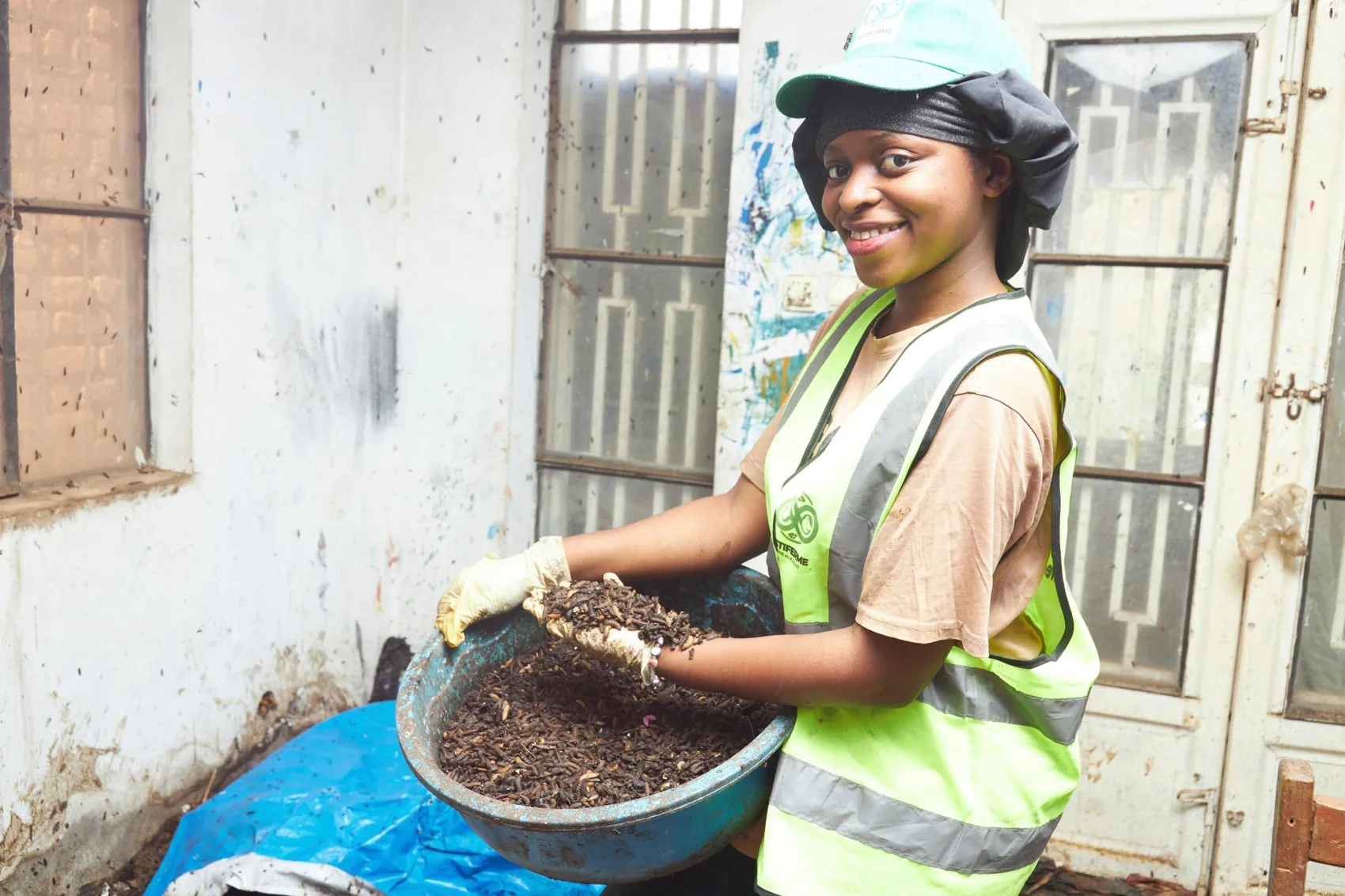
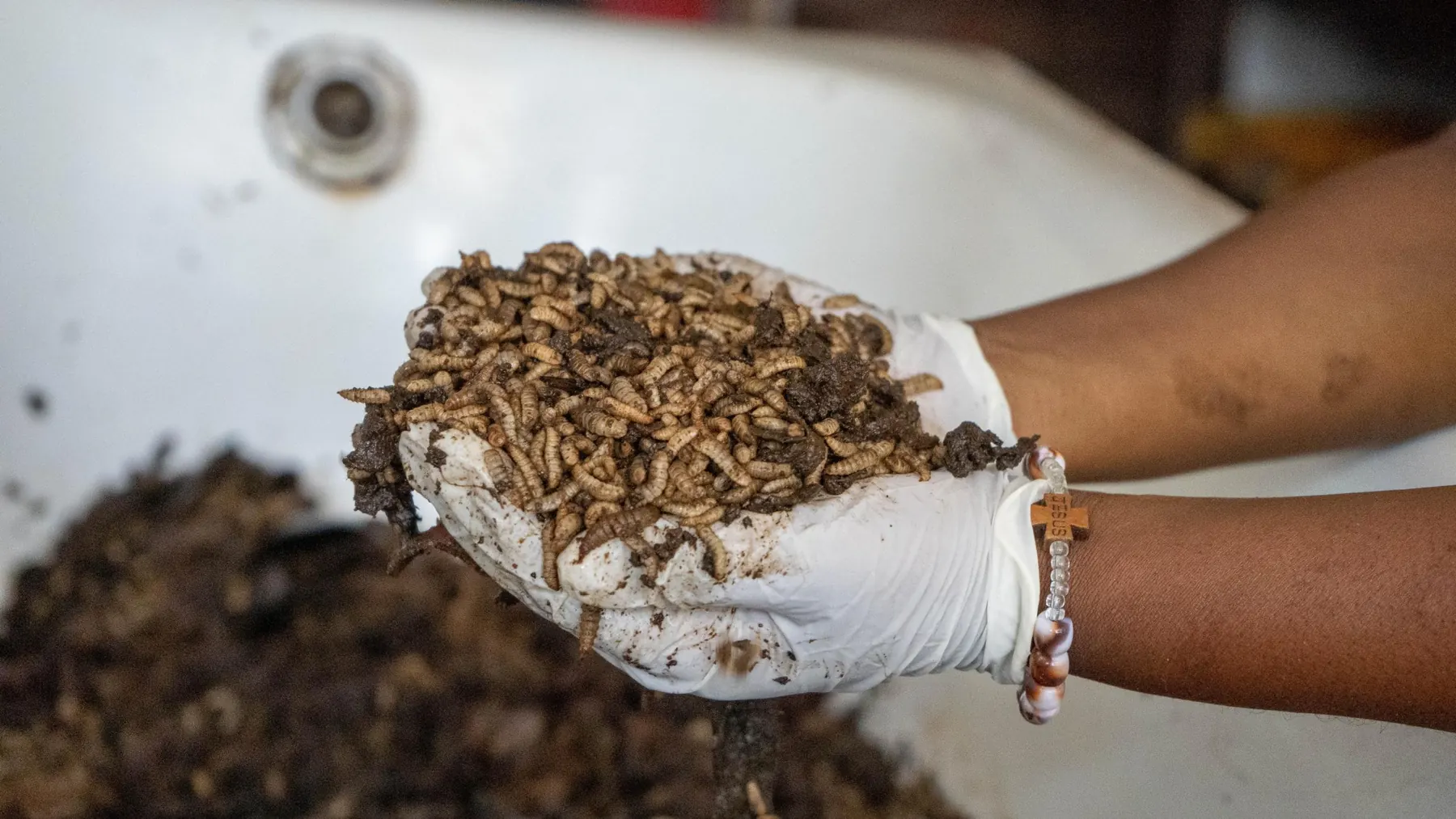
The larvae feast on waste
This is the heart of the model: in under 10 days, the larvae break down up to 70% of organic waste, with no odor.
 07Step / 10Harvest
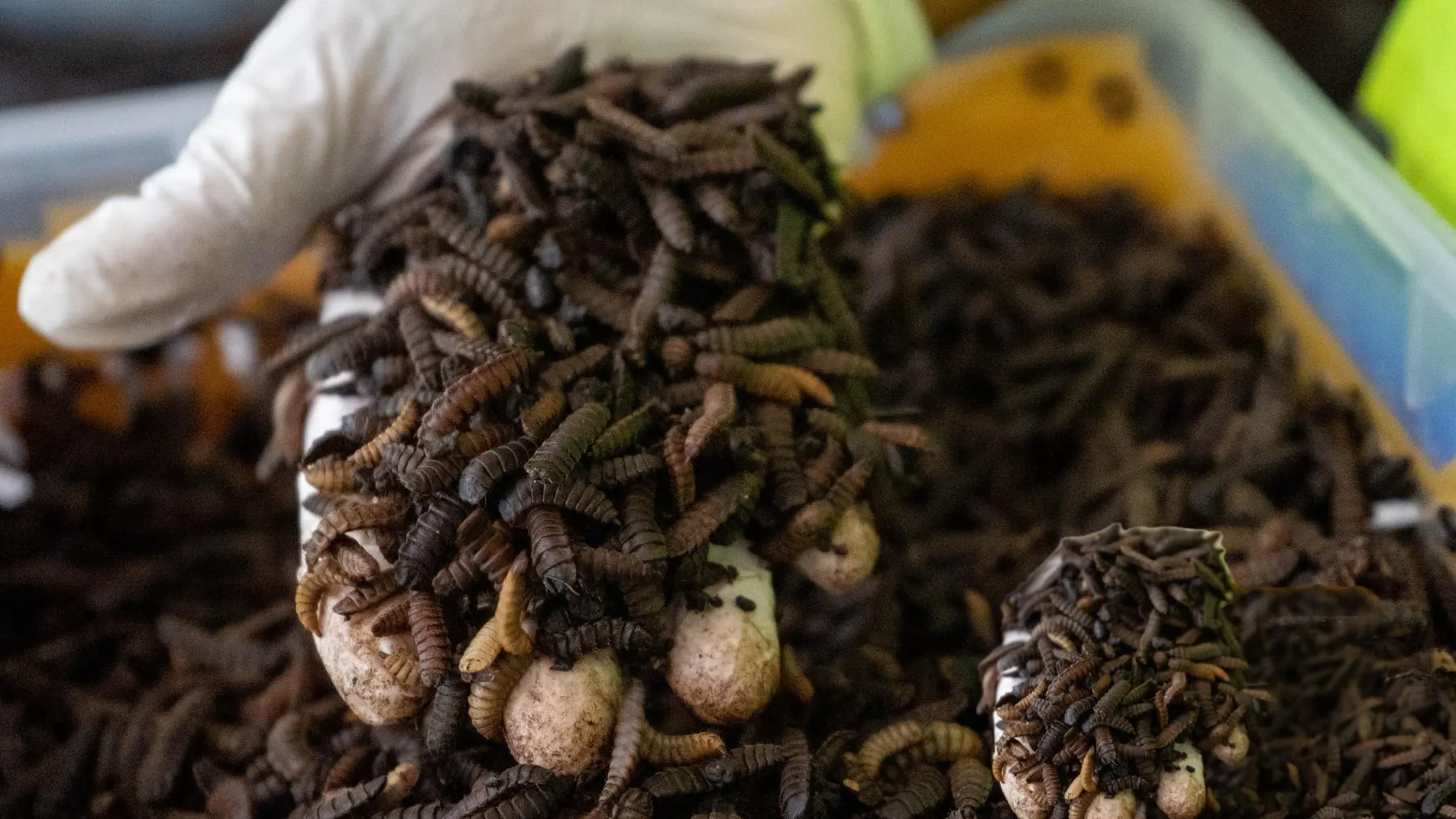
Harvest and separation
The larvae are separated from the processed matter. Protein on one side, frass on the other.
 08Step / 10End of cycle
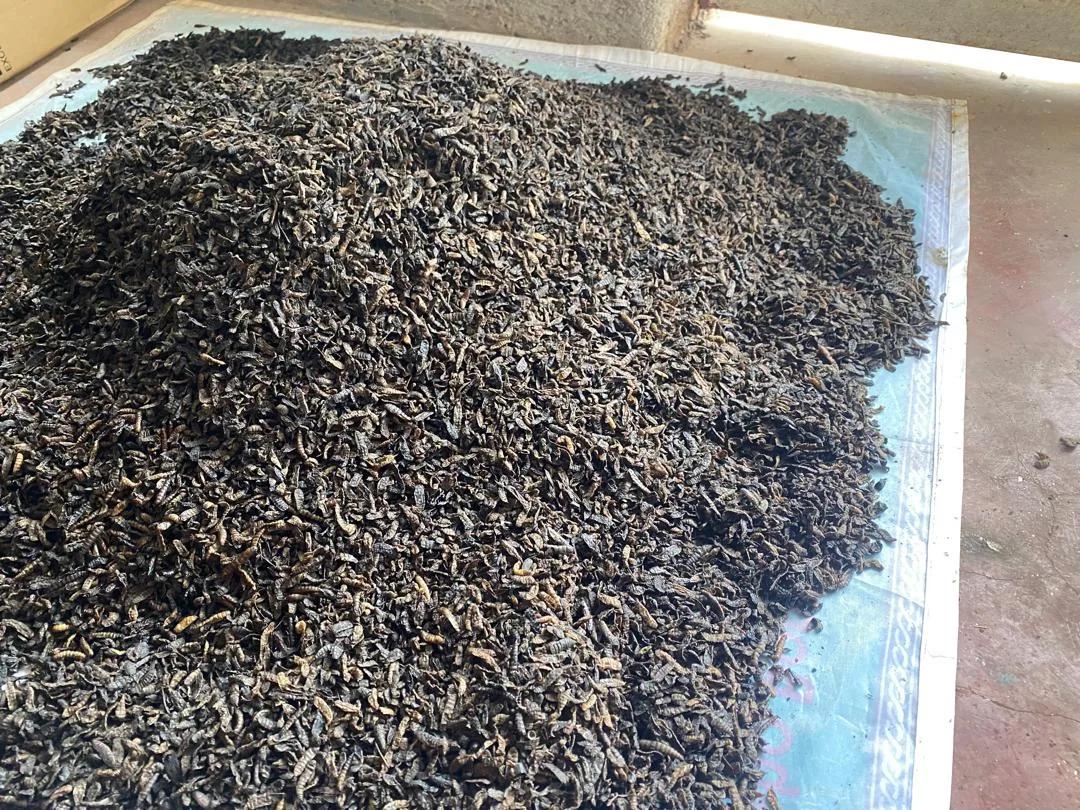
Frass, organic fertilizer
At the end of the cycle, what remains is frass: the organic fertilizer produced by black soldier fly larvae, rich in nutrients. It improves soil fertility and reduces the use of chemical fertilizers.
 09Step / 10Products
Larvae and fertilizer
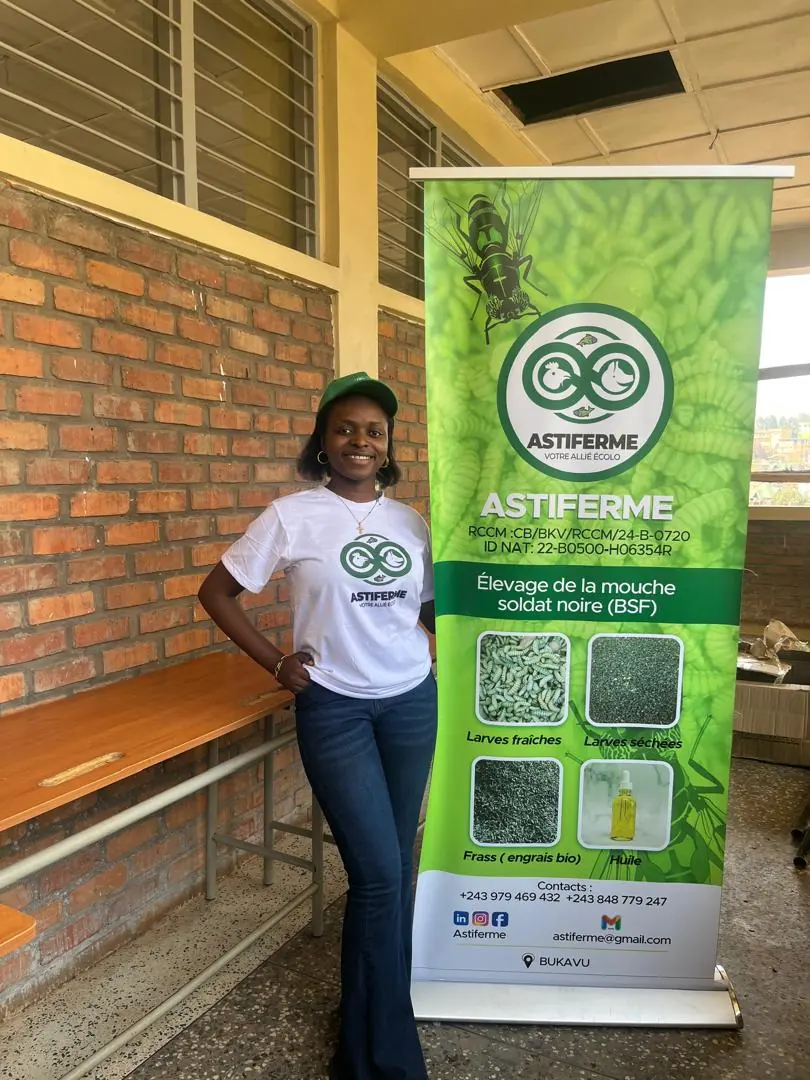
Fresh larvae, dried larvae, frass: three useful products, ready for livestock and crop farmers.
 10Step / 10The loop
Fish, poultry, pigs, fields
Animals are better fed, soils more fertile, and the loop closes: less waste, more food.
Contact
Let's talk about your needs.
Order, partnership, funding or just a question: write to us, we reply quickly.